
Cold shower this morning? A puddle by the garage heater? Before you start guessing, it helps to know what you can safely check yourself and when it is time for professional water heater repair in Brea. This guide walks through the quick, low-risk checks homeowners can do, the warning signs that mean you should stop and call, and what to tell a plumber so the visit starts in the right place.
Quick answer: If your water heater stops heating, leaks, or makes new noises, start with safe checks only: look for visible water, confirm the breaker or gas supply has not been interrupted, and note the model label. Do not open panels, relight gas burners you are unsure about, or touch the relief valve. Then call a qualified plumber for a diagnosis.
We are Pro Rooter Guys, a plumbing team based at 118 N Brea Blvd, and water heater installation and repair is part of our plumbing services. Request a water heater diagnosis when the quick checks below do not solve it.
Key Takeaways
- Safe homeowner checks are limited to looking, listening, checking the breaker or gas supply status, and noting the model label.
- Suspected gas leaks, scorching, a hissing relief valve, or water spreading near electrical equipment are stop-and-call situations.
- A symptom points to where a plumber should look; it is not a diagnosis.
- Clear notes on what changed and when can make a service visit more focused.
- Routine checks and annual professional service, as the EPA WaterSense home maintenance guide recommends, can help catch problems early.
What can you safely check before calling for water heater repair in Brea?
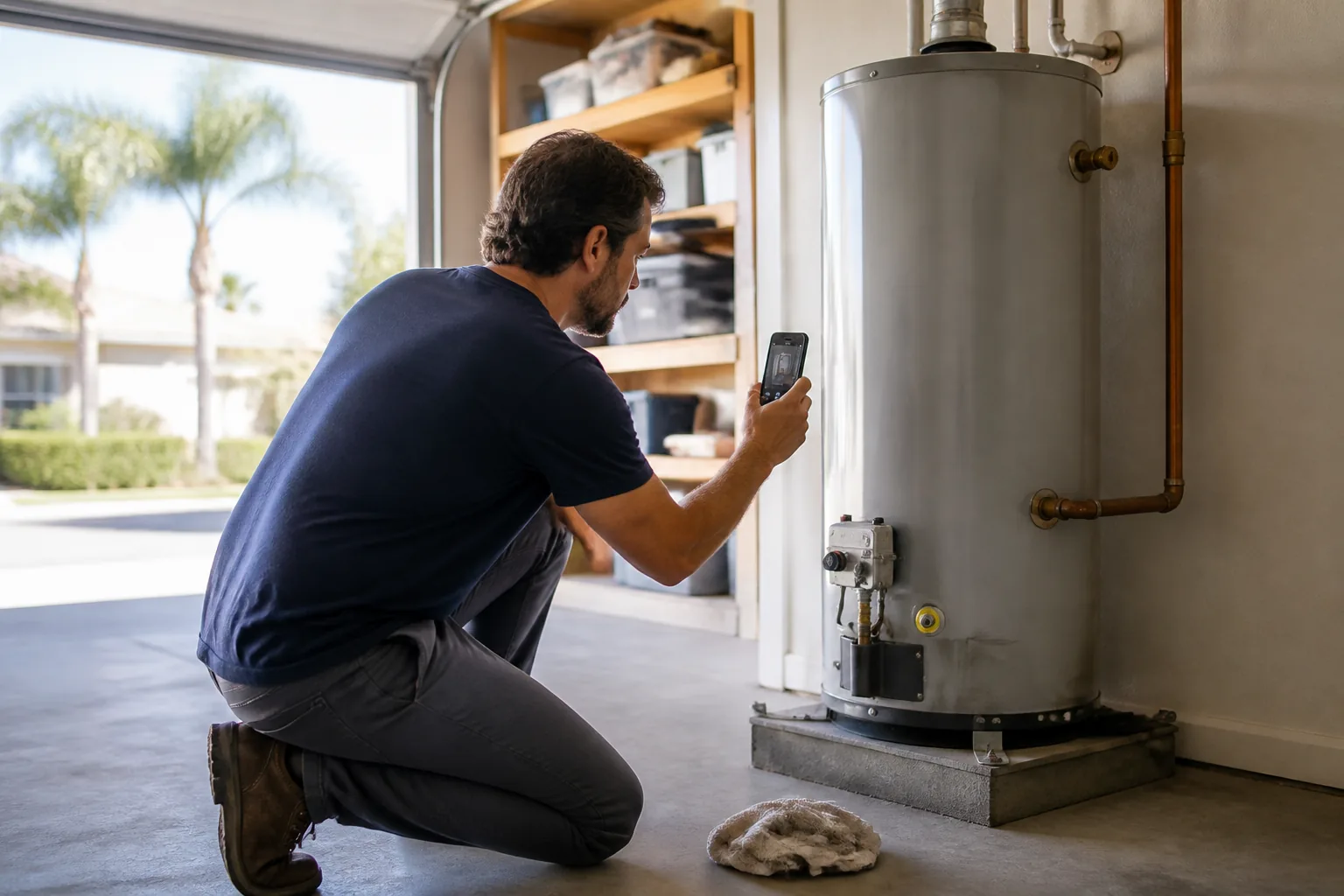
Homeowners can safely do a short list of visual and supply checks. Look around the base for water, confirm the circuit breaker for an electric unit has not tripped, check whether other gas appliances are working for a gas unit, and note the age and model. Anything that involves opening covers, tools, or gas controls belongs to a professional.
1. Look, do not touch
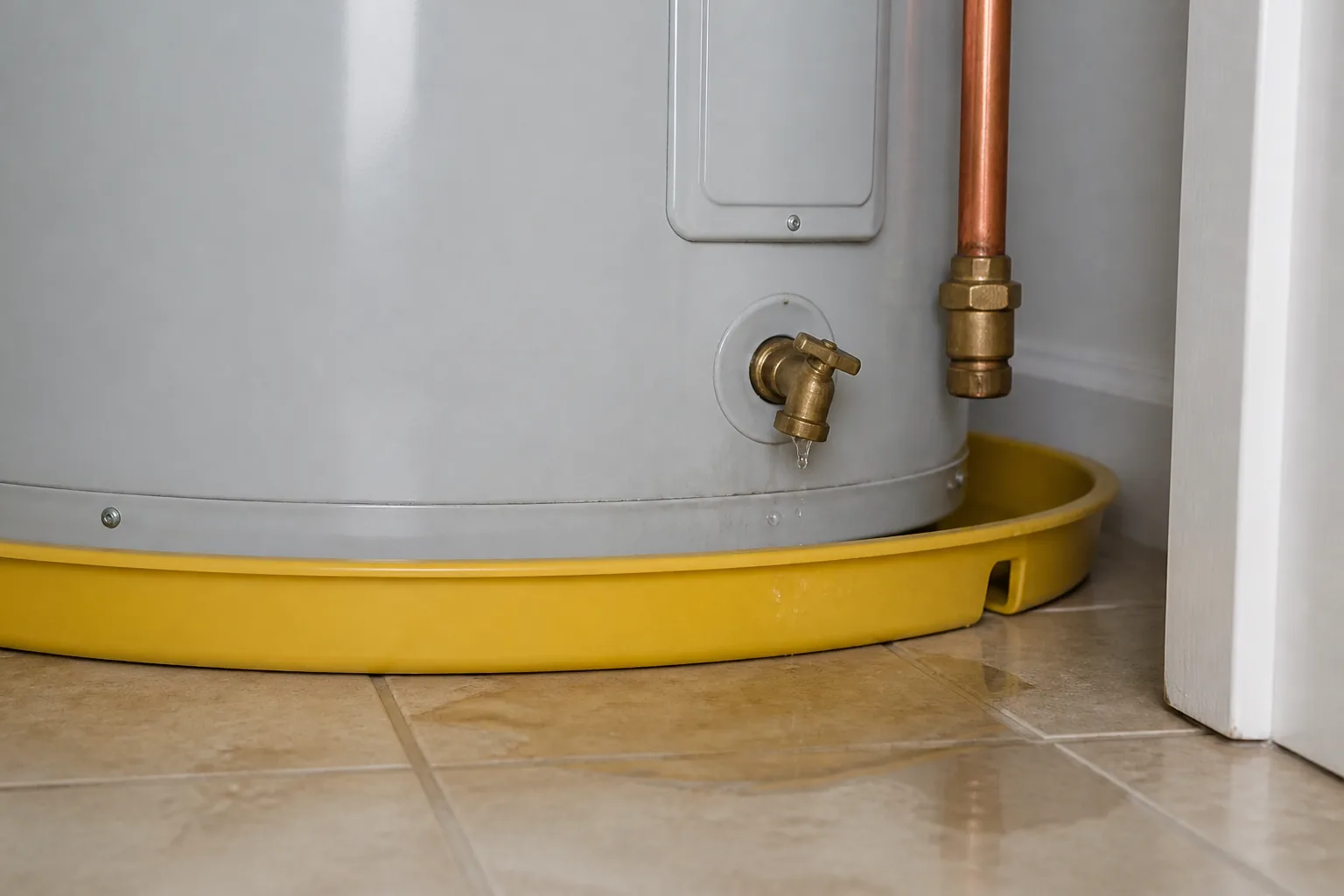
Check the floor, drip pan, and nearby walls for moisture. Note whether the water seems to come from the top connections, the side, or the bottom. Keep hands off hot pipes and the burner area.
2. Confirm the power or gas supply
For an electric heater, check whether the breaker labeled for the water heater has tripped. If it trips again after one reset, leave it off and call. For a gas heater, check whether the stove or other gas appliances work. If your area has a gas outage, the heater may simply be waiting on the supply.
3. Check whether the problem is whole-home or one fixture
If only one faucet runs cold, the issue may be at that fixture rather than the heater. If every hot tap is cold or lukewarm, the heater is the likelier source.
4. Note the details
Write down when the problem started, what changed, any sounds, and the manufacturer and model from the label if you can read it without moving anything. These notes save time on the call.
When should you stop and call a plumber right away?
Some signs mean the checks are over. Stop, keep people away, and get professional help if you notice any of the following:
- A natural gas smell, a hissing sound near gas piping, or any suspicion of a gas leak.
- Water spreading toward outlets, extension cords, or electrical panels.
- Scorch marks, soot, or a burning smell near the burner area or vent.
- Water or steam discharging from the temperature-and-pressure relief valve.
- Water seeping from the tank body itself rather than a fitting.
- A breaker that trips again after a single reset.
For any suspected gas leak, leave the area first. Do not switch lights or appliances on or off or create a flame. From a safe location, follow the SoCalGas natural gas leak instructions and call 911 if anyone is in danger.
What do common water heater problems usually point to?
Each symptom narrows where a plumber should start looking. Use this table as a conversation starter, not a repair guide.
|
|
|
|
|
|
|
|
|
|
|
|
|
|
|
|
|
|
|
|
|
|
|
|
|
|
|
|
Is it worth repairing an older water heater?
It depends on what failed. A worn component on a sound tank is often a reasonable repair. A tank that leaks through its body, shows heavy corrosion, or keeps needing repairs is a different conversation. We explain what we found and the options before any work starts, consistent with the transparent pricing approach on our plumbing page.
Good questions to ask any plumber:
- What exactly failed, and how did you confirm it?
- Is the tank itself in sound condition?
- What does the estimate include, and what is excluded?
- Would a repair here be a short-term fix or a reasonable longer-term option?
How can you lower the odds of another breakdown?
Most water heater trouble builds slowly. The EPA WaterSense program suggests regularly inspecting the heater for leaks, worn gaskets, loose connections, and corrosion, flushing sediment once a year, and checking the temperature-and-pressure relief valve annually. It also notes that hiring a professional to service the heater at least once a year is a good way to make sure everything is checked.
If you are not comfortable with flushing or valve checks, schedule them as part of a professional visit. As our Brea plumber guide puts it, water heaters usually struggle before they fail, so calling at the first unusual sign often means an easier fix.
What should you have ready when you call?
- Your address so the team can confirm Brea coverage. Our service areas page is a starting point.
- Gas or electric, tank or tankless, plus the model label photo if you have it.
- The symptom and timeline: what changed, when, and whether it is getting worse.
- What you already checked: breaker, gas supply, visible water.
- Your questions about scheduling and estimates: we’ll walk you through any diagnostic or after-hours charges when you call.
Water heater repair Brea FAQs
Can I relight my water heater pilot myself?
Some manufacturers include relighting instructions on the unit label, but only follow them if you are comfortable and smell no gas. If the pilot keeps going out, you smell gas, or you see soot, stop and call a qualified plumber. A pilot that will not stay lit usually means a part, gas control, or venting issue needs inspection.
Why does my water heater make popping noises?
Popping or rumbling often comes from sediment settling at the bottom of the tank, where heat causes trapped water to bubble through it. It is not always urgent, but it can reduce efficiency over time. Mention when the sound happens and whether it is getting louder so a plumber can decide whether flushing or further inspection makes sense.
Is a small leak under my water heater an emergency?
A small drip from a valve or fitting may not be an emergency, but it should be checked soon because leaks can grow and damage floors and walls. Treat it as urgent if water is spreading, nearing electrical equipment, or coming from the tank body. Keep the area clear and avoid moving the unit while you wait for help.
Why is my hot water lukewarm instead of hot?
Lukewarm water can point to a heating component issue, a thermostat setting, sediment, or simply more demand than the tank can recover from. Note whether every tap is affected and whether the change was sudden. A plumber can test the components and settings to find the cause instead of guessing.
Do you work on tankless water heaters in Brea?
We offer water heater installation and repair, including tankless systems. Share the brand and model when you contact us so we can confirm the appointment details for your unit.
How long does water heater repair take?
Timing depends on the diagnosis, whether parts are on hand, and the schedule. Some repairs can be completed in one visit, while others need a part ordered or a replacement discussion. Ask for the expected timeline along with the estimate so you know what to plan for.
Get your water heater checked by Pro Rooter Guys
Safe checks can tell you a lot, but they cannot replace a proper diagnosis. If your water heater is leaking, running cold, or acting strangely, let a professional take it from here. Book a water heater repair visit in Brea or call (213) 949-4202 and tell us what you noticed. We will explain what we find and your options before any work begins.