
A water-line problem can leave a homeowner choosing between a focused repair and replacing a longer section of pipe. For Brea properties, the first steps are to locate the leak, understand whether it is before or after the water meter, and assess the pipe and route. Low pressure, a wet yard, or a higher bill can be clues, but none proves that replacement is necessary.
This guide explains what to ask before approving work, how project scope can vary, and what the City of Brea says about the meter boundary. Pro Rooter Guys is based in Brea — call to confirm current availability for water-line work at your address.
Is water line replacement in Brea the right solution?
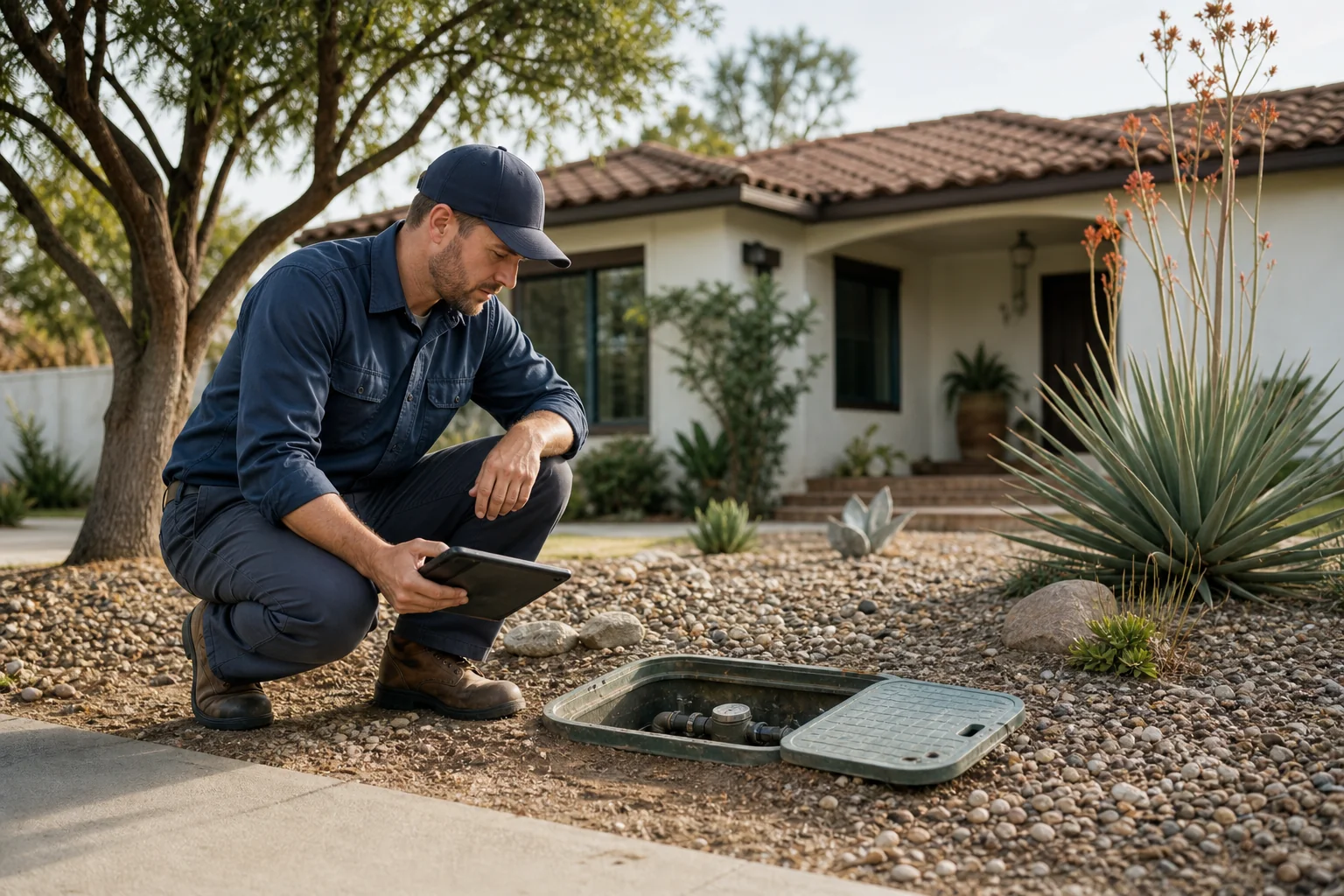
A water line usually should be replaced only when inspection finds widespread deterioration, repeated failures, or damage that cannot be dependably repaired in one section. One isolated leak may be repairable. The decision depends on the confirmed leak location, pipe condition, route, access, and utility conflicts; symptoms alone are not enough to choose replacement.
Key takeaways
- A symptom such as low pressure or a wet patch points to a problem to investigate, not automatically to a full replacement.
- A localized leak may be repairable; repeated failures or broader deterioration can make replacement worth evaluating.
- Line length, depth, access, hardscape, utility conflicts, permits, and method affect scope and cost.
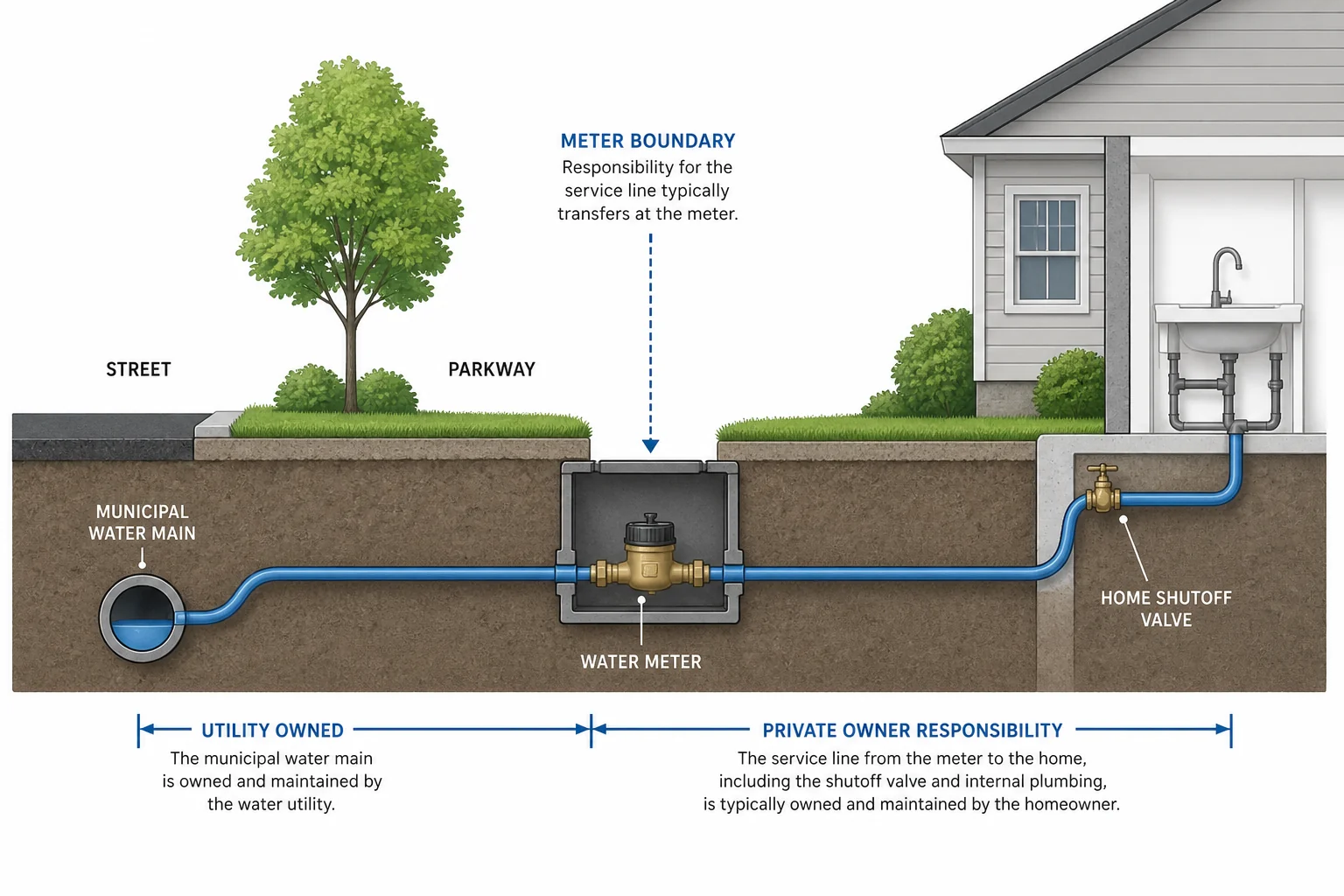
- In Brea, the City says homeowners are responsible for water leaks after the meter and inside the home.
- Call to confirm water-line service availability for your address before scheduling.
What signs can indicate a water-line problem?
A buried water service line may need investigation if water pressure changes across several fixtures, a water bill rises without a clear usage change, or an unexplained wet area appears along the line route. These symptoms can also have other causes. A plumber or the water utility can help narrow down the source before anyone recommends excavation or replacement.
- Pressure changes: A sudden or persistent drop affecting multiple fixtures may point to a supply or plumbing issue.
- Unexpected water use: If the meter continues moving while water is off, a leak may be present, but the meter and plumbing should be checked carefully.
- Wet or sunken ground: A damp patch may indicate a leak, irrigation issue, drainage problem, or another source.
- Discolored water: Discoloration can have several causes and is not by itself proof of a failed service line.
Note when the issue began, which fixtures are affected, and whether the meter changes while water is not being used. Avoid digging to find a line; underground utilities and private piping can be damaged. A leak beneath a home’s foundation is a different issue from a buried meter-to-home service line. Pro Rooter Guys has a separate guide to slab leaks in Brea for that distinct situation.
Should you repair a water line or replace it?
The choice depends on evidence from the specific pipe, not on one symptom or a generic rule about pipe age. Ask the contractor to show where the problem is, explain why the proposed repair should address it, and compare the scope and risks of a localized fix with replacing a longer run.
|
|
|
|
|
|
|
|
|
|
|
|
|
|
|
|
|
|
|
|
This comparison is a discussion aid, not a diagnosis. A second opinion can be reasonable when the proposed work is extensive or the evidence is unclear. If the issue sounds more like a leak under a foundation, see the broader slab-leak explainer; a slab leak and an underground service-line leak are not interchangeable terms.
How does water-line replacement work?
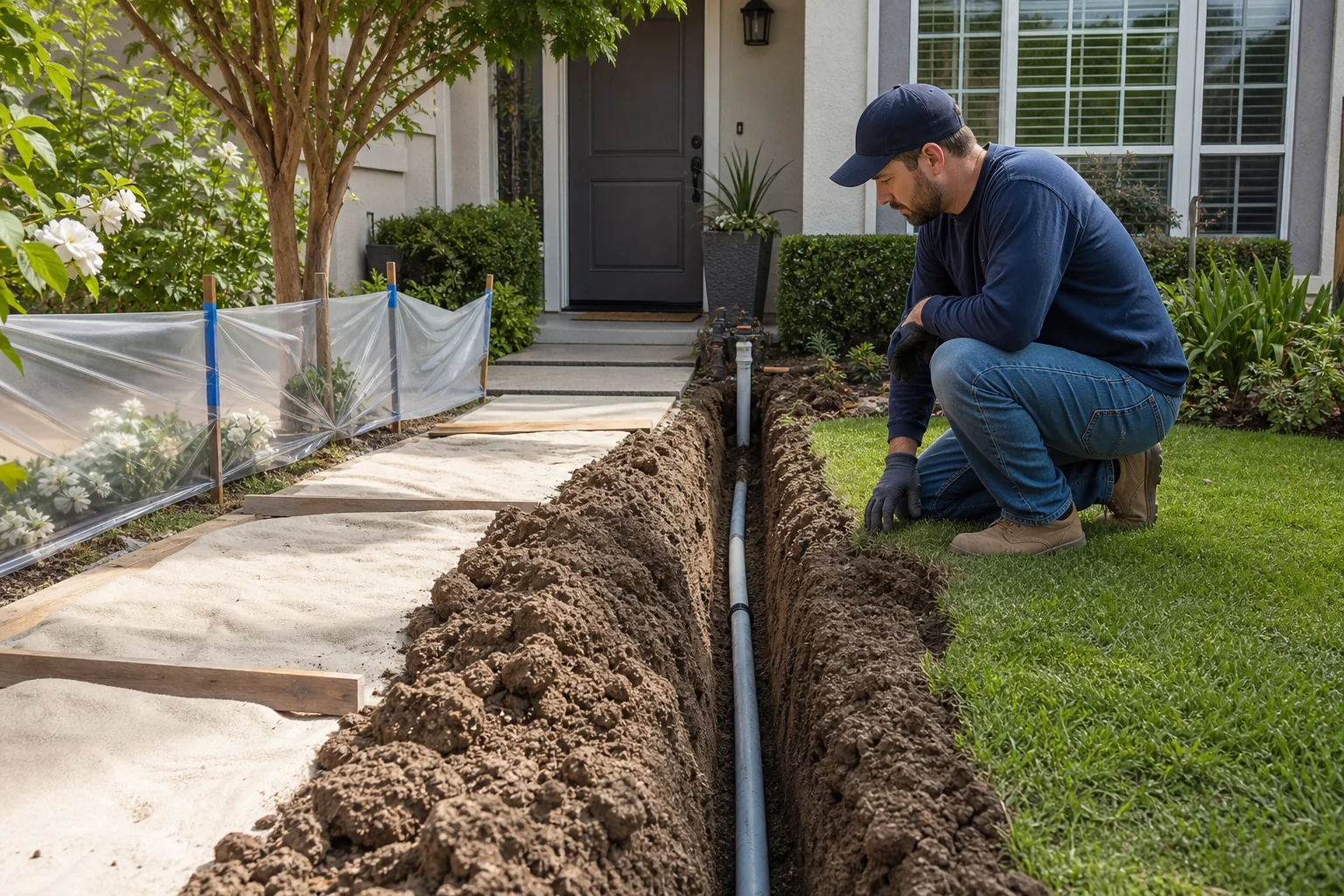
A responsible replacement plan begins by confirming the failure and identifying the route. The contractor then reviews access, depth, nearby utilities, property features, and any inspection or permit requirements that apply. Only after that review can the contractor explain whether a repair, open trench, or another method is appropriate for the particular site.
Diagnosis and route planning
The first task is to determine whether the problem is on the public or private side of the meter and where the affected pipe runs. A contractor may need to review plans, inspect accessible piping, test pressure, or use suitable leak-detection methods. Ask what is known, what remains uncertain, and whether utility locating is needed before ground is disturbed.
Trenching and lower-disturbance methods
Conventional trenching exposes the route so a damaged section can be accessed. A trenchless approach may reduce surface disruption in some circumstances, but it is not a no-dig guarantee and is not suitable for every pipe, route, or site. Ask which methods the provider offers and why the selected method fits your line.
Testing and restoration
After installation or repair, ask how the line will be checked for leaks and how the work area will be restored. The written scope should identify the work area, materials, testing, restoration responsibilities, and any permits or inspections included. Do not assume that landscaping, paving, or interior finish repairs are included unless the estimate says so.
What affects water-line replacement cost and timing?
There is no reliable one-price estimate from the query alone. A contractor needs to assess the property and describe the work before giving a project-specific price or schedule. Ask for a written estimate that separates the line work from related tasks and explains what could change the final scope.
- Length and depth: A longer or deeper route can require more labor and material.
- Access and surfaces: A line beneath a driveway, walkway, mature landscaping, or other hardscape may require additional removal and restoration.
- Utilities and route: Nearby gas, electrical, irrigation, sewer, or other lines can affect planning and safe access.
- Pipe and method: Material selection and the repair or replacement method depend on site conditions and what the contractor offers.
- Permits and inspections: Requirements vary by project. Confirm who checks and obtains any needed approvals.
- Restoration: Ask whether backfill, paving, planting, or other surface work is included or handled separately.
Timing depends on diagnosis, access, utility coordination, approvals, material availability, and restoration. Ask what must happen before work starts and which parts of the schedule are estimates. Avoid relying on a generic promise of same-day completion or a fixed timeline without a site-specific scope.
Who is responsible for a water leak after the meter in Brea?
The City of Brea Water FAQ says homeowners are responsible for leaks after the water meter and inside the home. The City says the meter is generally in the parkway and Public Works can assist with shutting water off at the meter. If you cannot locate the leak, the FAQ says to contact the Water Division about leak detection. Confirm the boundary with the City when it is unclear.
The FAQ lists the Water Division number as 714-990-7691. Contact the City before arranging private work if you are unsure whether water is escaping on the utility side or the homeowner side. Do not assume that every wet spot or high bill is a private service-line failure.
For more local plumbing information, browse the Pro Rooter Guys blog. The existing Brea slab-leak article covers a related but different kind of hidden leak; keep that distinction clear when choosing a service.
How to choose a water-line contractor in Brea
Before approving a project, look for a clear diagnosis, an itemized written scope, an explanation of method suitability, and answers about permits, testing, and restoration. Ask for any license or insurance details you want to verify and request documented examples relevant to the type of line being repaired. Customer reviews can provide context, but they do not replace a property-specific assessment.
Pro Rooter Guys is based in Brea and serves Orange County, Los Angeles, and the San Gabriel Valley. The site lists re-piping and trenchless repair methods generally — call to confirm whether water-line replacement specifically is available for your address before scheduling.
Water-line replacement FAQs
How do I know if my main water line needs replacement?
Repeated leaks, broad deterioration, or a confirmed failure across a longer section can make replacement worth evaluating. Low pressure, a high bill, or wet ground alone cannot confirm that the main water line has failed. Ask a qualified professional to locate the problem, explain the evidence, and compare repair with replacement before authorizing excavation.
Is repair or replacement better for a leaking water line?
Repair may make sense when inspection finds one isolated leak and the surrounding pipe appears serviceable. Replacement may be considered when failures recur or damage extends along the line. Neither option is automatically best: the right scope depends on the verified leak location, pipe condition, route, access, and the contractor’s findings.
Can a water line be replaced without digging up the whole yard?
Some projects may qualify for a lower-disturbance or trenchless method, while others require open excavation. Suitability depends on the existing pipe, route, access, nearby utilities, and the method a provider offers. “Trenchless” does not mean there will be no digging or restoration. Ask the contractor to explain the proposed method and its limits for your property.
Who is responsible for a water leak after the meter in Brea?
The City of Brea says the homeowner is responsible for leaks after the water meter and inside the house. The City also says Public Works can assist with turning off water at the meter and the Water Division can help with leak detection. Check the City’s current FAQ or contact the Water Division if the meter boundary is uncertain.
How long does water-line replacement take?
There is no dependable timeline without knowing the route, depth, access, utility conflicts, approvals, method, and restoration needs. Ask for a project schedule after the site has been assessed and have the contractor identify any dependencies that could change it. Treat broad online time ranges as general information, not a commitment for a specific Brea property.
Does low water pressure mean my water line must be replaced?
No. Low pressure can have several causes, including a fixture issue, a valve, a leak, or a problem elsewhere in the plumbing or supply. Note whether pressure changes affect one fixture or the whole property and when the problem occurs. Diagnosis should identify the source before anyone recommends replacing a buried line.
Request a water-line assessment
Start with the confirmed location of the problem and a written explanation of the proposed scope. If you are considering Pro Rooter Guys, check the current service-area information and call (213) 949-4202 to ask whether water-line replacement is available at your Brea address.
When comparing options, request an assessment that explains whether a focused repair is reasonable, why replacement may be recommended, and what testing and restoration are included. An informed decision starts with the actual pipe condition, not a guess based on symptoms.